
Unplug to Unlock: What an Artist Hand-Drawing 1,000 Birds Can Teach Us About Deep Work
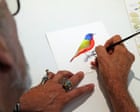
In an era where every pixel on our devices is engineered to hijack our attention, an unlikely rebellion is taking shape on the northern California coast. In the quiet, salt-air-kissed town of Bolinas, artist Keith Hansen is meticulously hand-painting one thousand distinct bird species. His exquisite watercolors—ranging from the subtle gradient of a sparrow's wing to the brilliant, improbable cobalt of a painted bunting—aren't destined for a traditional gallery retrospective. Instead, they are the heartbeat of an ambitious digital paradox: an application designed specifically to make you put your phone down.
At Workup Today, we spend a lot of time thinking about the architecture of attention. We build immersive focus timers and deep work environments designed to help you conquer your most challenging cognitive tasks. Yet, a fundamental truth underpins our entire philosophy: the goal of mastering your screen time isn't to live inside an app forever. The ultimate objective of digital discipline is to reclaim your physical reality.
Hansen’s meticulous project highlights a profound design philosophy that we often lose sight of in modern productivity culture—the concept of tactile friction and intentional slowness. When creating art with an ultra-fine sable brush, there is no 'undo' button, no instant algorithmic gratification, and no infinite scroll. There is only the paper, the pigment, and the unyielding passage of time. This deliberate pace stands in stark contrast to the hyper-speed dopamine loops of the modern attention economy.
The Trap of Micro-Distractions
Most knowledge workers do not struggle with laziness; they struggle with environmental friction. Every notification ping, every background tab, and every impulsive reach for a smartphone fractures our cognitive continuity. We attempt to write complex reports or design intricate systems while our brains are being intermittently tickled by digital stimuli. The result is shallow busyness masquerading as productivity.
True deep work requires unbroken stretches of concentration—a state where the mind can submerge beneath the surface turbulence of everyday distractions. Just as Hansen requires absolute focus to capture the iridescent nuance of a bird's plumage, your best intellectual output demands a protected mental sanctuary.
Reclaiming the Physical World
What makes the Flock app's approach so brilliant—as detailed recently in a report by The Guardian Technology—is that its ultimate call to action exists entirely outside the digital realm. By using hand-drawn art as a bridge, it coaxes users away from their glass screens and out into the physical world to observe real wildlife.
This mirrors how we encourage users to utilize Workup Today. A focus timer should not be a cage that traps you at your desk for ten hours a day. Rather, it should be a precision tool that helps you compress your necessary tasks into high-intensity, undistracted blocks of time. By ruthlessly eliminating shallow multitasking during your work sessions, you clear out the mental and temporal space needed to step away entirely—to go for a walk, observe nature, or engage in analog hobbies without the phantom vibration of a smartphone in your pocket.
Building Sustainable Focus Habits
If you want to transform your relationship with focus, borrow a page from both the deep work playbook and the naturalist's sketchbook:
- Embrace Analog Constraints: Introduce intentional friction into your digital life. Put your phone in another room when tackling your most demanding creative or analytical tasks.
- Protect Your Deep Blocks: Treat your focus time with the same reverence an artist gives to a blank canvas. Do not allow casual interruptions to bleed into your sacred work hours.
- Step Away with Intention: When your focus session ends, actually disconnect. Resist the urge to trade one screen for another. Use your newfound free time to engage with the physical world around you.
Mastering your attention isn't about becoming a machine; it's about reclaiming your humanity. By designing better boundaries around our digital tools—and finding inspiration in projects that champion the beauty of the natural world—we can finally bridge the gap between working deeply and living fully.